Introduction
The Bunsen burner flame is one of the most recognisable heat sources in science laboratories around the world. Whether in a school classroom, university research facility, or industrial laboratory, it provides a dependable and adjustable source of heat for a wide range of scientific applications. From heating chemicals to sterilising equipment, this simple yet highly effective flame has played a significant role in scientific discovery for more than a century.
Although modern laboratories now use electric heating devices and digital equipment, the Bunsen burner continues to be an essential laboratory tool because of its versatility, affordability, and precise flame control. Understanding how the flame works, why different flame colours appear, and how to use it safely is important for anyone studying or working in a laboratory.
This guide explains everything you need to know, including how the flame is produced, the different flame types, their temperatures, practical applications, safety precautions, and why the Bunsen burner remains relevant in modern science.
What Is a Bunsen Burner Flame?
A Bunsen burner flame is the controlled flame produced when fuel gas mixes with oxygen and is ignited at the top of a laboratory burner. The flame can be adjusted by controlling the amount of air entering the burner through its rotating collar. This ability to regulate the oxygen supply allows users to produce either a cooler yellow flame or a much hotter blue flame, depending on the task being performed.
Unlike household flames, the laboratory flame is specifically designed to provide consistent heating while minimising soot and smoke. This makes it suitable for experiments where cleanliness, accuracy, and temperature control are essential.
The burner itself operates using natural gas, methane, or liquefied petroleum gas (LPG), depending on the laboratory’s gas supply. Once ignited, the mixture of gas and air produces a stable flame that can easily be adjusted for different laboratory procedures.
Bio Table
| Attribute | Details |
|---|---|
| Article Title | Bunsen Burner Flame: Complete Guide to Types, Temperature, Uses, Benefits, and Safety |
| Focus Keyword | bunsen burner flame |
| Category | Science |
| Sub-Category | Laboratory Equipment |
| Content Type | Educational Guide |
| Article Purpose | To educate readers about the Bunsen burner flame, its types, temperature, uses, benefits, and laboratory safety. |
| Target Audience | Students, Teachers, Researchers, Laboratory Technicians, Science Enthusiasts |
The History Behind the Burner
The Bunsen burner was developed during the nineteenth century by German chemist Robert Wilhelm Bunsen with assistance from laboratory instrument maker Peter Desaga. Their goal was to create a safer and more efficient laboratory burner capable of producing a clean flame suitable for chemical analysis.
Earlier laboratory burners often created smoky flames that contaminated glassware and affected experimental results. The improved burner introduced controlled air intake before combustion, allowing fuel to burn more completely. This innovation produced a cleaner, hotter flame that quickly became the international standard for laboratory heating.
Today, despite advances in laboratory technology, the basic design has remained largely unchanged because of its reliability and effectiveness.
How the Flame Works
The burner functions through a simple but efficient process. Gas enters the burner through the base and travels upward through a vertical metal tube known as the barrel. Before reaching the top, air enters through adjustable openings called air holes.
The rotating collar controls how much oxygen mixes with the fuel gas before ignition. When little air enters, combustion is incomplete and produces a bright yellow flame. When the air holes are opened, additional oxygen allows complete combustion, producing a clean blue flame with much higher temperatures.
Because the amount of oxygen directly affects combustion, users can easily adjust the flame according to the heating requirements of different experiments.
Different Types of Flames
The appearance of the flame changes depending on the air supply. Understanding these flame types is important because each serves a different purpose in laboratory work.
The yellow flame, often called the luminous or safety flame, appears when the air holes remain closed. Since less oxygen reaches the fuel, combustion is incomplete. This flame burns at a lower temperature and produces tiny carbon particles that give it its yellow appearance. Although it is not suitable for serious heating because it produces soot, it remains useful when the burner is temporarily left on between experiments because the bright colour makes it easy to see.
The blue flame appears when the air holes are opened. More oxygen mixes with the gas, allowing complete combustion. This flame burns much hotter, remains nearly invisible in bright rooms, and produces very little soot. It is the preferred flame for heating chemicals, sterilising laboratory instruments, and performing flame tests.
Understanding the Flame Structure
The blue flame contains several distinct regions, each with different temperatures and chemical reactions.
The inner blue cone contains partially burned gas where combustion has only begun. Although hot, it is not the hottest part of the flame.
Surrounding this inner cone is the outer blue region, where complete combustion occurs. This is the hottest area of the flame and provides the most efficient heating. Laboratory glassware is usually positioned just above the tip of the inner cone because this location receives maximum heat transfer without damaging the container.
The uppermost section of the flame remains slightly cooler than the hottest region but continues to provide effective heating for many laboratory procedures.
Understanding these temperature zones helps students and researchers apply heat more accurately during experiments.
Temperature of the Flame
One of the biggest advantages of the burner is its ability to generate high temperatures while remaining easy to control.
The yellow safety flame generally reaches temperatures between approximately 300 and 600 degrees Celsius. Since combustion is incomplete, much of the fuel’s energy is lost through soot formation.
The blue heating flame can reach temperatures of approximately 1,200 to 1,500 degrees Celsius depending on the fuel supply and oxygen intake. The hottest point lies just above the inner blue cone, making this the ideal location for heating laboratory vessels.
These temperatures are sufficient for boiling liquids, heating metal tools, sterilising equipment, conducting flame tests, and supporting many chemical reactions.
Applications in Scientific Laboratories
Laboratories depend on the burner because it supports a wide variety of scientific procedures. Chemistry laboratories frequently use it to heat solutions, evaporate liquids, and accelerate chemical reactions. Biology and microbiology laboratories rely on the flame to sterilise inoculating loops, forceps, needles, and other reusable metal instruments before handling microorganisms.
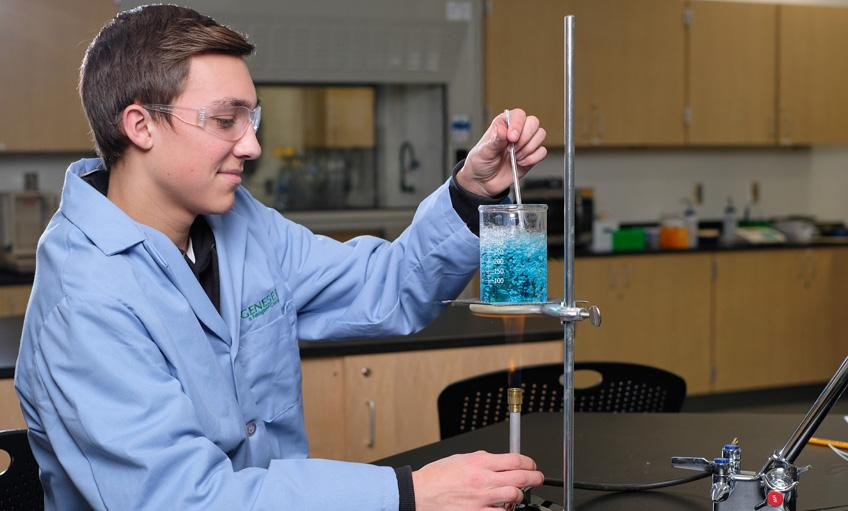
Educational institutions continue to use the burner because it allows students to safely learn basic laboratory techniques while observing combustion, heat transfer, and flame characteristics. Industrial laboratories also employ it during quality control testing, sample preparation, and materials research where controlled heating is required.
Glassworking applications also benefit from the burner, as laboratory technicians use its heat to soften and bend small glass tubes during equipment preparation.
Benefits of Using a Bunsen Burner
One reason laboratories continue using this equipment is its remarkable simplicity. It contains very few moving parts, making it durable and inexpensive to maintain over many years of regular use.
The adjustable flame provides flexibility for different laboratory tasks. Users can quickly change from a visible safety flame to a powerful heating flame within seconds simply by rotating the collar.
The burner also delivers clean combustion when correctly adjusted. Since the blue flame produces almost no soot, laboratory glassware remains cleaner, improving the accuracy of scientific experiments.
Another important advantage is rapid heating. Compared with alcohol lamps and spirit burners, gas burners generally reach higher temperatures much faster, reducing experiment time while improving efficiency.
Essential Safety Practices
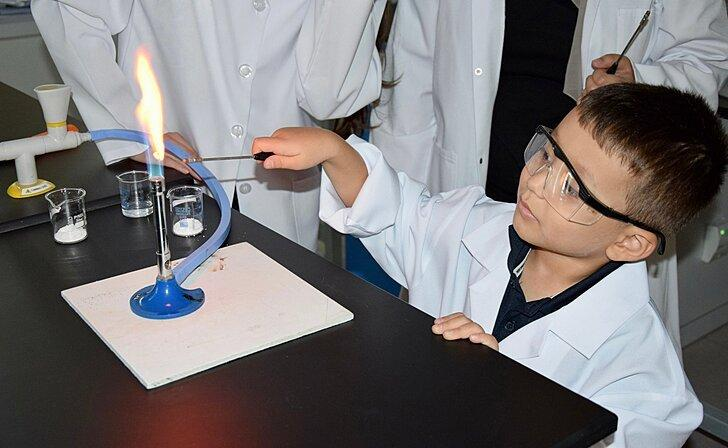
Working safely around open flames is critical in every laboratory. Proper protective equipment, including safety goggles, laboratory coats, and closed-toe footwear, should always be worn before lighting the burner.
Before ignition, users should inspect gas tubing and connections to ensure there are no leaks. The workspace should remain clear of paper, solvents, and other flammable materials that could accidentally catch fire.
Whenever active heating is not required, the burner should be switched back to the visible yellow safety flame. This makes it easier for everyone in the laboratory to recognise that the burner remains lit.
Long hair should be secured away from the flame, and hot glassware should always be handled using suitable tongs or heat-resistant gloves because heated glass often appears identical to cool glass.
Finally, the gas supply should always be turned off completely after experiments have finished.
Common Mistakes to Avoid
Many beginners make the mistake of heating objects directly inside the inner cone, assuming this area is the hottest. In reality, the greatest heat is found just above the tip of the inner cone.
Another common error is leaving the burner on the blue flame while unattended. Because the blue flame is difficult to see under bright laboratory lighting, it increases the risk of accidental burns.
Using damaged gas tubing or failing to inspect equipment before use can also create unnecessary safety hazards. Regular maintenance and careful inspection greatly reduce these risks.
Modern Importance
Although electric hot plates, heating mantles, and induction systems have become common in advanced laboratories, the traditional burner still offers unique advantages. It provides immediate heat, requires no electrical power, and allows scientists to visually control flame intensity with exceptional precision.
Its affordability also makes it accessible for educational institutions around the world, ensuring future generations of students continue learning practical laboratory techniques.
Even in highly advanced research facilities, the burner remains valuable for quick heating, sterilisation, and demonstrations where portable and adjustable heat is required.
Conclusion
The Bunsen burner flame remains one of the most important tools in laboratory science because it combines simplicity, reliability, and precise heat control. Its adjustable design allows users to switch easily between a visible safety flame and a powerful blue heating flame, making it suitable for countless scientific applications. Whether heating chemicals, sterilising instruments, or teaching students the fundamentals of laboratory practice, it continues to play a vital role in research and education. By understanding how the flame works and following proper safety procedures, laboratory users can perform experiments efficiently while maintaining a safe working environment.