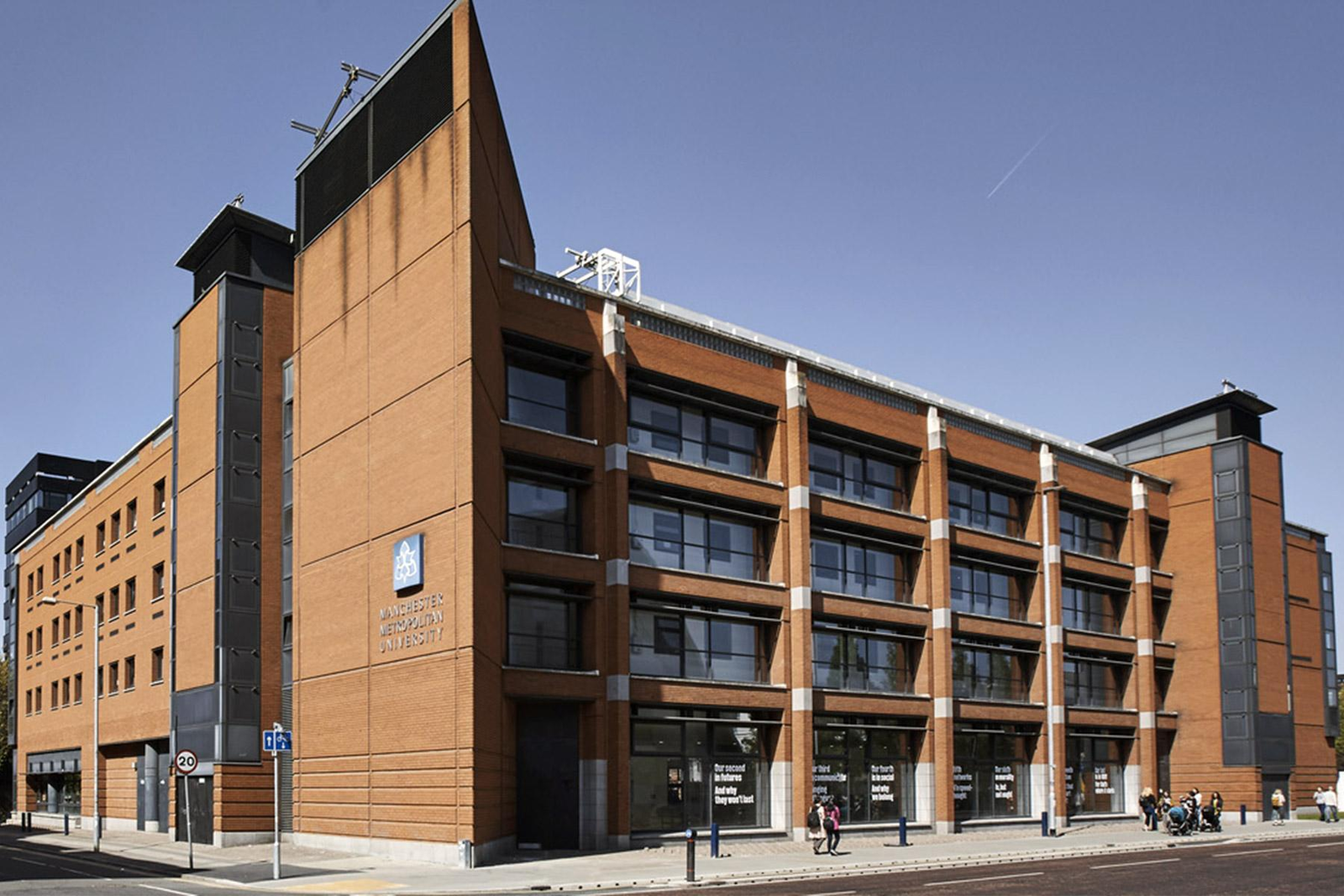
Manchester Metropolitan University has a number of recognisable buildings across its city-centre campus, but some have a particularly strong connection with the university’s academic and cultural life. Geoffrey Manton MMU is one of them. Situated on Rosamond Street West near Oxford Road, the building has been part of Manchester Met’s campus for decades and continues to provide an important setting for teaching, research, study and university events.
For students, prospective applicants and visitors, understanding the building can make a university visit much easier. It is not simply a place where lectures take place. Its large internal spaces, teaching rooms, study areas and central location allow it to support a wide variety of academic activities. The building also has an interesting place in Manchester Metropolitan University’s history, having been officially opened by Queen Elizabeth II in 1996.
What Is Geoffrey Manton MMU?
The Geoffrey Manton Building is a Manchester Metropolitan University building located at 4 Rosamond Street West, Manchester, M15 6LL. Manchester Met identifies it as the home of Humanities, Languages and Social Sciences, making it particularly significant for students and staff connected with these areas.
The building occupies a prominent position close to Oxford Road and forms part of Manchester Met’s All Saints Campus. Its city-centre setting means students can reach it from other university buildings as well as from nearby transport connections.
Although people often search for it using the shorter term Geoffrey Manton MMU, the official university name is Geoffrey Manton. The building is also used for conferences, talks, academic meetings and other university activities, giving it a role that extends beyond everyday classroom teaching.
Bio Table
| Detail | Information |
|---|---|
| Name | Geoffrey Manton Building |
| University | Manchester Metropolitan University (MMU) |
| Location | 4 Rosamond Street West, Manchester, M15 6LL, UK |
| Campus | All Saints Campus |
| Main Academic Area | Humanities, Languages and Social Sciences |
| Opened | 1996 |
| Opening | Opened by Queen Elizabeth II |
| Building Type | University academic and event building |
| Facilities | Lecture theatres, study spaces, meeting rooms and event areas |
| Known For | Teaching, research, conferences and student activities |
History of the Building
The history of Geoffrey Manton MMU is closely connected with the development of Manchester Metropolitan University itself. Manchester Polytechnic became Manchester Metropolitan University in 1992 after gaining degree-awarding powers, marking an important stage in the institution’s development.
Four years later, in 1996, the Geoffrey Manton Building was officially opened by Her Majesty Queen Elizabeth II. Manchester Metropolitan University records that it became the new home of the Faculty of Arts and Humanities.
That history helps explain why the building has remained an important part of the university campus. Rather than being a recently constructed facility, it represents a period when Manchester Met was expanding and strengthening its academic identity in the city.
The building has continued to evolve over the years. More recently, Manchester Met has invested in improvements to its campus facilities, including refurbishment work at Geoffrey Manton. This reflects the university’s broader programme of improving teaching, study and student spaces across the campus.
Location
One of the strongest advantages of the building is its location. Geoffrey Manton MMU is positioned at 4 Rosamond Street West, close to Oxford Road in Manchester.
The surrounding area is one of the busiest parts of the university district. Students have access to many other Manchester Met buildings, city-centre facilities and transport links within a relatively short distance.
Manchester Met describes its campus as being in the heart of Manchester, which gives students the opportunity to combine university life with the wider facilities of the city. The building’s location is therefore useful not only for attending classes but also for exploring Manchester after university hours.
The university also provides access maps for the building, including floor plans covering the basement, ground floor, lower ground floor and upper floors. These resources can be useful for students and visitors who need to find a particular room.
Academic Role
Today, Geoffrey Manton MMU is primarily associated with Humanities, Languages and Social Sciences. This gives the building an important academic identity within Manchester Metropolitan University.
The subjects connected with this part of the university cover areas of study concerned with people, society, culture, languages, history and related fields. Students studying these disciplines may spend a significant amount of time in or around the building during their university experience.
The building also accommodates research activity. For example, Manchester Met research groups and academic projects have used the building as their base, demonstrating that its role is not limited to undergraduate teaching.
This combination of teaching and research creates a lively academic environment. At different times of the day, the building can be used for lectures, seminars, meetings, independent study, conferences and research-related activities.
Lecture Theatres
One of the most recognisable features described in historical information about the building is its collection of tiered lecture theatres.
The Manchester History website notes that the building was designed with seven tiered lecture theatres, supported by audio-visual equipment. These spaces provide a traditional university lecture environment while allowing large groups of students and visitors to attend presentations and talks.
The lecture theatres have also been used for university open-day activities. Manchester Met’s published open-day information has listed subject talks and tours taking place in several of the building’s lecture theatres.
This makes the building particularly useful during busy university events, when prospective students need to hear about courses and experience the campus for themselves.
Central Atrium
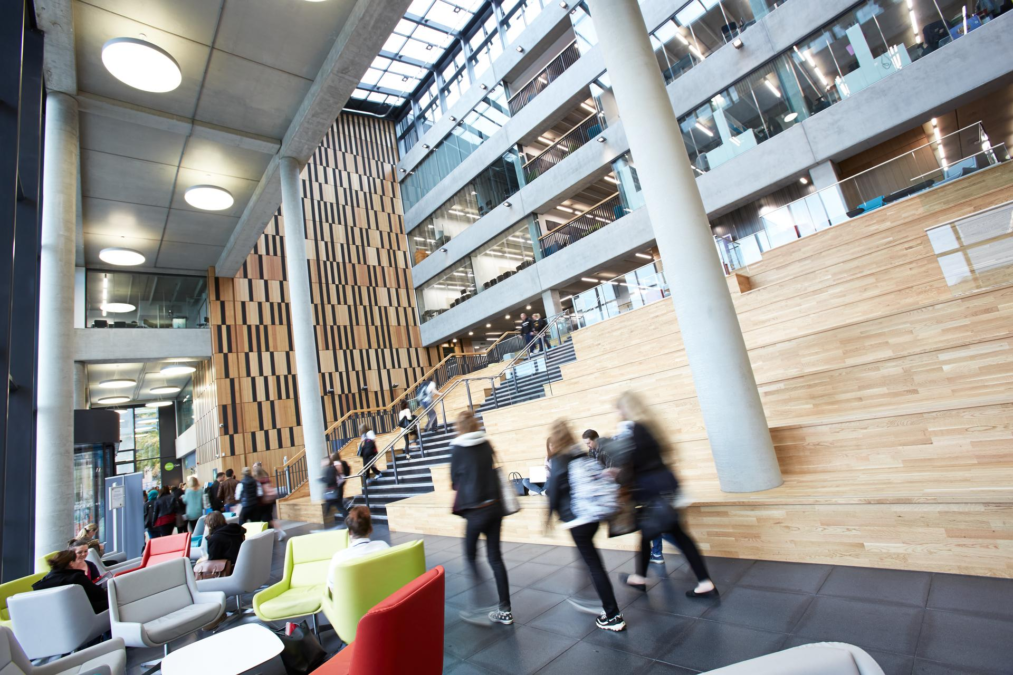
The central atrium is another defining feature. Historical information about the building describes the atrium as the hub of the building, and this remains an important part of its character.
Rather than functioning simply as a corridor between rooms, the large central space can support exhibitions, refreshments, networking and gatherings. Its open design gives the building a communal quality that is particularly useful during conferences and university events.
The atrium also makes the building easier to navigate because several parts of the interior connect around this central area. For visitors attending an event, it can act as a natural meeting and registration point.
Study Spaces
For students, one of the most practical features of Geoffrey Manton MMU is its study provision. Manchester Metropolitan University lists a ground-floor study zone within the building.
The university has also highlighted the ground floor as a useful place for students who prefer studying around other people. This can be especially helpful for students who want a change from the quieter environment of a traditional library.
The study area is supported by practical facilities including vending machines and microwaves. These small details can make a difference during longer study sessions, particularly when students are working between lectures.
The availability of different study environments is part of a wider approach taken by Manchester Met, which provides study and social spaces throughout its city-centre campus.
Meetings and Events
The building has a long-standing connection with conferences and events. Its combination of lecture theatres, meeting rooms, central atrium space and audio-visual facilities makes it suitable for academic and professional gatherings.
The upper floors contain meeting and breakout spaces, while the atrium can be used for networking and refreshments. This arrangement allows different parts of an event to take place within the same building.
Academic conferences have also been held at the venue. Research presentations, panel discussions and registration sessions have used different rooms and areas of the building, showing how flexible the facility can be.
For Manchester Met, this makes the building useful not only as a teaching location but also as a venue for bringing researchers, students, academics and visitors together.
Accessibility
Accessibility is an important consideration for any modern university building. Manchester Metropolitan University provides specific access information and floor plans for Geoffrey Manton.
The university’s building access information includes maps for several levels and identifies accessible entrances and facilities. This allows students and visitors to plan their route before arriving.
Manchester Met also provides information about physical access across its campus and encourages people to contact its facilities management team if they experience an access issue.
Having detailed building maps available online is particularly useful for new students, visitors attending events and anyone who needs to know the location of lifts, accessible toilets or specific rooms in advance.
Opening Hours
The standard opening hours published by Manchester Metropolitan University are Monday to Friday from 8:00am to 7:30pm. During university vacation periods, the listed opening hours are 8:00am to 6:00pm from Monday to Friday.
Staff with appropriate identification can access the building earlier, from 7:00am. The university also notes that buildings are locked after the stated closing period.
Opening arrangements can change during university holidays, special events and other periods, so students and visitors should check the latest university information before making a journey.
Who Uses It?
The building is mainly used by Manchester Metropolitan University students, academic staff and professional staff. Its connection with Humanities, Languages and Social Sciences means that students from these areas are particularly likely to use the facility.
However, the building is not restricted to one type of activity. Open days, conferences, research events, subject talks and other university programmes can bring prospective students, academics and external visitors into the building.
This mixture gives the building a different atmosphere depending on the time of year. A normal teaching day may be dominated by students moving between lectures and study areas, while a conference day can bring a larger group of visitors into the atrium and lecture theatres.
Why It Matters to Manchester Met
The importance of Geoffrey Manton MMU comes from its combination of history, academic use and location. It has been part of Manchester Metropolitan University since the 1990s and has supported the university’s arts, humanities and social science activities for many years.
Its architecture was designed around large teaching and gathering spaces, while later improvements have helped keep the building relevant to changing student needs.
The building also forms part of the visual and academic identity of the All Saints Campus. Alongside other Manchester Met buildings, it contributes to a university environment that is closely connected with Manchester city centre.
Geoffrey Manton Building Today
The building continues to serve a practical role in university life. Manchester Met’s current information confirms its connection with Humanities, Languages and Social Sciences, while its study spaces and event facilities give it a broader function.
Recent campus investment has also included refurbishment of the ground floor. The university has described this work as part of wider improvements to its estate and facilities, alongside developments elsewhere on campus.
For current students, this means the building combines its established architectural character with updated spaces designed for modern university life.
Final Thoughts
Geoffrey Manton MMU is much more than a university address. It is a building with a clear place in Manchester Metropolitan University’s history, having opened in 1996 as the home of the Faculty of Arts and Humanities.
Its location near Oxford Road, central atrium, lecture theatres, meeting spaces and student study areas make it a practical part of the university campus. Its continuing connection with Humanities, Languages and Social Sciences also gives it a strong academic identity.
For prospective students visiting Manchester Met, researchers attending an academic event or anyone interested in Manchester’s university architecture, the building offers an interesting example of how education, architecture and city life come together. Its history from the 1990s through to its present-day role shows how an established university building can continue to adapt while remaining an important part of campus life.