Horse racing is a sport where even the smallest details can influence the outcome of a race. Among the many factors that experienced punters and racing enthusiasts analyse, draw bias Southwell remains one of the most discussed. While a horse’s ability, fitness, jockey, and pace all play significant roles, the starting stall can sometimes provide an advantage depending on the course layout and race conditions.
Southwell Racecourse has earned a unique reputation among British racing fans because of its all-weather surface and distinctive track characteristics. Over the years, changes to the racing surface have also altered how analysts evaluate stall positions, making modern data far more valuable than historical trends.
This guide explains everything you need to know about draw bias Southwell, including how it works, why it matters, how the Tapeta surface changed previous patterns, and how to use draw information when analysing races.
What Is Draw Bias?
In horse racing, every runner is allocated a numbered starting stall before the race begins. This allocation is known as the “draw.” Depending on the design of a racecourse, some stall positions may offer a slightly better opportunity to secure a favourable racing position during the opening stages.
When certain stall numbers consistently produce stronger results over time, analysts describe this as a draw bias. Some tracks favour horses drawn close to the inside rail, while others may show little or no noticeable advantage at all.
It is important to understand that draw bias is never a guarantee of success. Instead, it represents one factor among many that can influence the final result.
Introducing Southwell Racecourse
Southwell Racecourse is one of Britain’s best-known all-weather racing venues. Located in Nottinghamshire, it stages racing throughout the year and attracts horses from leading trainers across the United Kingdom.
The course hosts both flat and National Hunt racing, although discussions about draw positions mainly relate to the flat all-weather circuit.
One of the biggest changes in Southwell’s history occurred in late 2021, when the famous Fibresand surface was replaced with Tapeta. This transformation significantly changed how races are run and how draw statistics should be interpreted today.
Because of this change, racing analysts generally separate historical Fibresand data from modern Tapeta results rather than combining them into one long-term trend.
Bio Table
| Field | Details |
|---|---|
| Topic | Draw Bias Southwell |
| Category | Horse Racing / Sports Betting |
| Article Type | Informative Guide |
| Focus Keyword | draw bias southwell |
| Search Intent | Informational |
| Suitable For | Horse racing fans, bettors, and beginners |
Understanding Draw Bias Southwell
The term draw bias Southwell refers to whether horses starting from particular stalls perform better than others under specific race conditions.
Unlike some racecourses where one side of the track consistently dominates, Southwell presents a more balanced picture on the Tapeta surface. The effect of the draw often depends on several variables, including race distance, number of runners, early pace, and where the first bend appears.
Rather than relying on stall numbers alone, modern form students combine draw analysis with pace maps, jockey tactics, trainer records, and recent horse performance.
How the Track Influences Racing
Every racecourse has its own character, and Southwell is no exception.
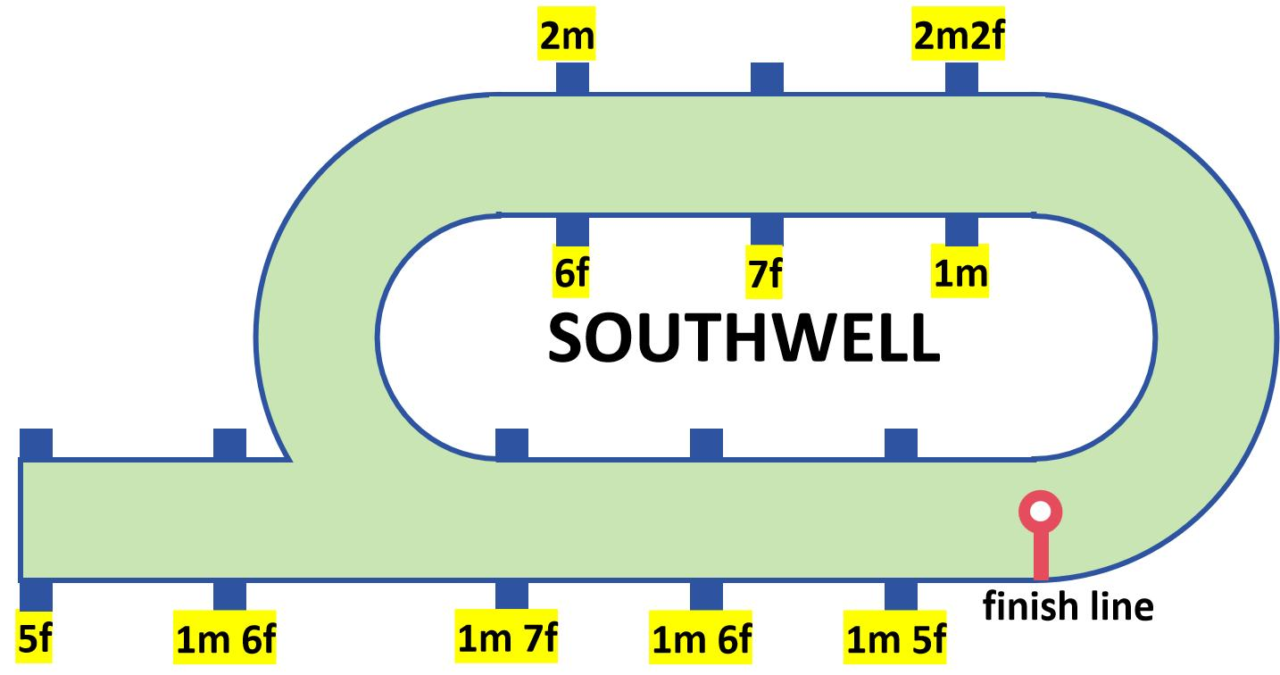
The straight sprint course allows horses to remain in a relatively direct line for shorter races, while longer contests include bends that can influence positioning during the early stages.
If a race reaches the first corner quickly, horses drawn nearer the inside rail may require less energy to secure a good position. Conversely, races on the straight course often depend more on pace than stall location.
Track maintenance, weather conditions, field size, and running styles can all influence how a race develops.
The Tapeta Surface Changed Everything
For many years, Southwell was famous for its Fibresand surface. That material produced deep kickback and created racing conditions unlike almost any other course in Britain.
Horses that handled Fibresand often developed specialist reputations, while previous draw statistics reflected the unique behaviour of that surface.
Since the installation of Tapeta, racing has become more consistent and fairer for a wider variety of horses. Modern Tapeta creates less kickback and produces racing conditions that are closer to those found at other leading all-weather tracks.
Because of this, older draw statistics should not automatically be applied to current races.
Draw Bias Over Different Distances
The influence of the draw varies according to race distance.
Five-furlong contests on the straight course sometimes produce slight positional advantages depending on where early speed develops. However, modern analysis suggests that these advantages are generally smaller than they were during the Fibresand era.
Over six furlongs, where runners soon approach a bend, stall position can become slightly more important. Horses able to secure a good early position without expending excessive energy may enjoy a tactical advantage.
As race distances increase to seven furlongs, one mile, and beyond, the importance of the draw generally decreases. Horses have more time to find suitable positions before the race reaches its decisive stages, allowing class, stamina, and race tactics to become the dominant factors.
Why Pace Often Matters More Than the Draw
Professional race analysts rarely study the draw in isolation.
A horse with excellent early speed may overcome a difficult stall by quickly securing a prominent position. Likewise, a slow-starting horse drawn favourably may still lose valuable ground if unable to match the early pace.
Modern race analysis frequently combines draw data with pace maps, which estimate where each runner is likely to race during the opening stages.
This combination often provides a much clearer picture than stall numbers alone.
Benefits of Understanding Draw Bias
Learning about draw bias Southwell offers several advantages for racing enthusiasts and bettors.
It helps readers interpret race cards more effectively and recognise situations where stall position could influence tactics. Understanding how the course layout interacts with early pace also improves race analysis and encourages more informed betting decisions.
Knowledge of draw trends can assist in identifying horses that may be underestimated by the betting market, particularly when favourable stall positions combine with strong recent form.
For those studying racing professionally, draw analysis provides another valuable layer of information alongside ratings, sectional times, speed figures, and trainer statistics.
Common Misunderstandings
Many newcomers assume the lowest stall always provides the greatest advantage.
In reality, this is rarely true.
Modern Southwell racing demonstrates that no single draw consistently dominates every race. Different distances produce different trends, while field size and pace frequently have a greater influence than stall position alone.
Another common mistake is relying on historical Fibresand statistics without recognising how dramatically the Tapeta surface changed racing conditions.
Successful analysts focus on recent results rather than outdated patterns.
How Professionals Study Southwell Races
Experienced handicappers build their analysis by combining several pieces of information instead of concentrating on one statistic.
Recent horse form remains one of the strongest indicators of future performance. Trainer records at Southwell also provide useful insights, particularly for yards known to target all-weather racing.
Jockey experience, race pace, official ratings, distance suitability, previous Tapeta performances, and current fitness all contribute to a balanced assessment.
When these elements support a favourable stall position, confidence in a selection naturally increases.
Is Draw Bias Still Important Today?
The answer is yes, but with important qualifications.
Modern racing evidence suggests that draw bias Southwell still exists in certain circumstances, particularly in competitive sprint races. However, its influence is generally smaller than during the Fibresand era and should always be considered alongside pace, race tactics, and horse quality.
Most professional analysts now view draw position as one piece of a much larger puzzle rather than a decisive factor on its own.
This balanced approach produces more reliable race assessments and reduces the risk of overvaluing historical statistics.
Can Beginners Use Draw Statistics?
Absolutely.
Understanding draw statistics can help beginners appreciate how racecourses differ from one another and why certain horses attract market support before the race begins.
Rather than attempting to memorise every historical trend, newcomers should concentrate on recent Southwell results and observe how different stall positions perform under similar race conditions.
Over time, this practical experience develops a stronger understanding of course characteristics and race dynamics.
Conclusion
Draw bias Southwell continues to be an important part of modern horse racing analysis, but it should never be viewed in isolation. Since the introduction of the Tapeta surface, the racecourse has become more balanced, reducing many of the strong biases that once existed on Fibresand.
Today’s successful analysts combine draw information with pace, current form, trainer performance, jockey ability, and race conditions to build a complete picture before making predictions. This broader approach reflects how professional handicappers evaluate races and offers a more reliable foundation for betting decisions.
Whether you are new to horse racing or an experienced enthusiast, understanding how draw bias works at Southwell can improve your appreciation of the sport and help you make more informed judgements. By focusing on modern data rather than outdated assumptions, you can develop a clearer understanding of one of Britain’s most fascinating all-weather racecourses.
FAQs
Q: What is draw bias Southwell?
A: It refers to how starting stall positions may influence a horse’s chances at Southwell Racecourse.
Q: Does draw bias matter at Southwell?
A: Yes, but its impact depends on race distance, pace, and field size.
Q: What surface does Southwell use?
A: Southwell now uses the Tapeta all-weather racing surface.
Q: Is draw bias more important in sprint races?
A: Yes, draw position is generally more influential in shorter sprint races.
Q: Should I rely only on draw bias when betting?
A: No. Always consider form, pace, jockey, trainer, and race conditions alongside the draw.