Introduction
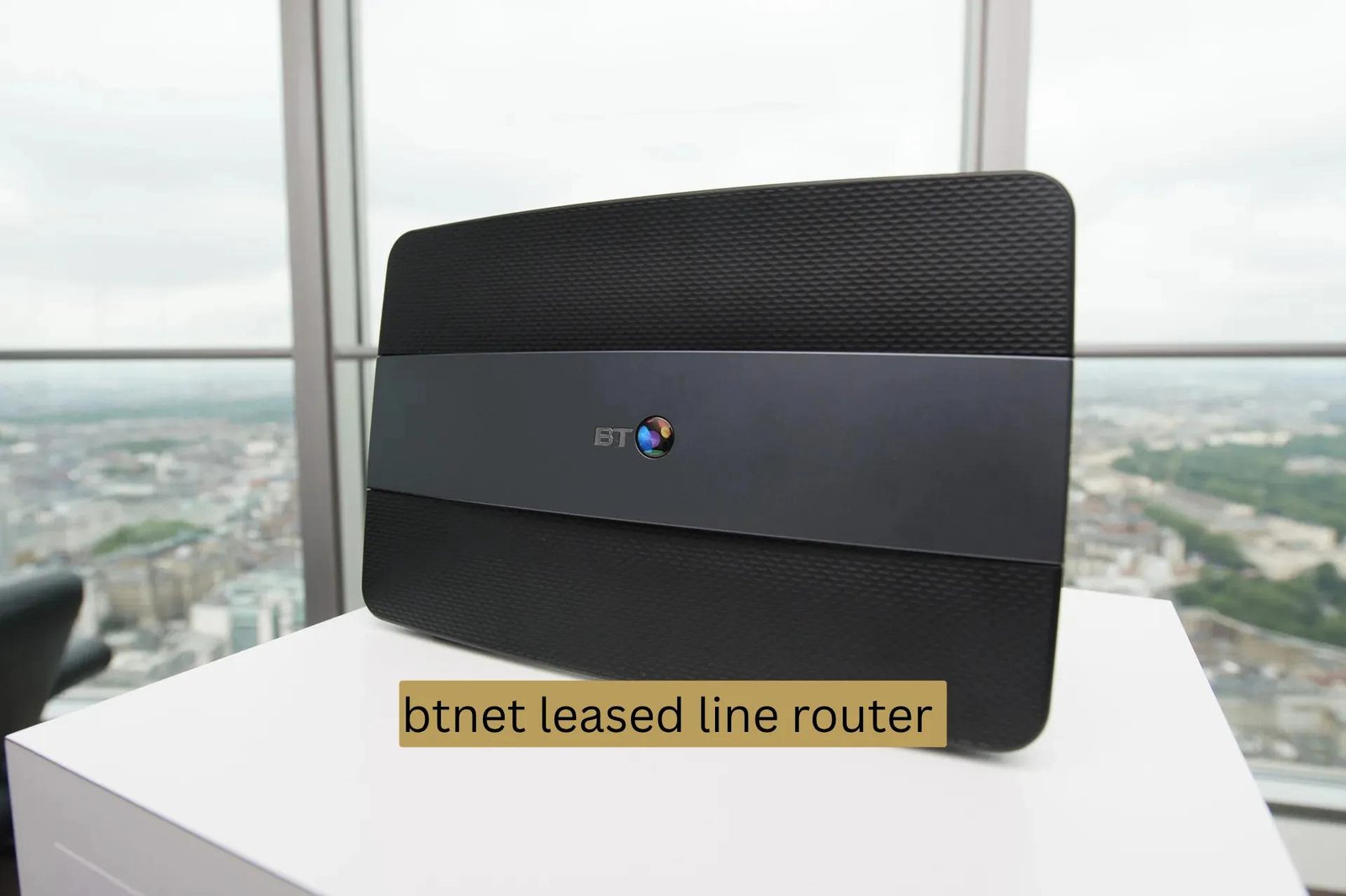
A BTNet leased line router is an essential part of modern business internet infrastructure, especially for companies that require stable, high-speed, and dedicated connectivity. In simple terms, it is the networking device that connects a business’s internal office network to BT’s leased line service. Unlike standard home broadband routers, this setup is designed for enterprise environments where downtime, lag, or unstable speeds can directly affect business operations. The BTNet leased line itself is a dedicated fibre connection provided by BT Business, and the router acts as the control point where all traffic enters and exits the organization’s network.
Role of BTNet Router in Business Connectivity
In a typical business environment, internet connectivity is not just about browsing websites. Companies rely heavily on cloud platforms, video conferencing tools, remote servers, internal databases, and VoIP communication systems. Because of this dependency, even a few minutes of internet disruption can lead to financial loss or productivity issues. This is where the BTNet leased line router becomes important. It ensures that the dedicated line provided by BT is properly managed, distributed, and secured across all connected devices within the organization.
How BTNet Leased Line Router Works
The working principle of a BTNet leased line router is fairly straightforward but highly efficient. The leased line from BT connects directly to the business premises through a fibre optic cable. This connection is not shared with other users, meaning the bandwidth remains consistent regardless of external network congestion.
Once the fibre reaches the premises, it is terminated at a network termination unit (NTU) or optical network terminal (ONT). From there, the BTNet router takes over and distributes the internet connection to internal devices such as computers, servers, switches, and wireless access points. This structured flow ensures that data is routed correctly between the internal network and the external internet.
BTNet Leased Line Router – Quick Information Table
| Feature | Details |
|---|---|
| Keyword | BTNet leased line router |
| Definition | A business router used to connect company networks to a dedicated BTNet leased line internet service |
| Purpose | Provides stable, high-speed, and secure internet connectivity for businesses |
| Internet Type | Dedicated fibre leased line (not shared broadband) |
| Speed Type | Symmetrical upload and download speeds |
| IP Support | Static IP addresses for business services |
| Common Devices | Cisco, Juniper, Fortinet, BT-managed routers |
| Main Users | Corporates, call centers, data centers, enterprises |
| Key Benefits | High uptime, stable connection, secure routing, cloud support |
| Management Type | Managed by BT or customer-managed (wires-only setup) |
| Use Cases | VPN, VoIP, cloud services, hosting, CCTV systems |
Stability and Performance Benefits
One of the most important advantages of a BTNet leased line router setup is stability. Unlike traditional broadband connections that fluctuate in speed during peak usage hours, leased line connections remain consistent at all times. This is because the bandwidth is dedicated to a single customer.
The router plays a key role in maintaining this stability by efficiently managing traffic flow and ensuring that internal network requests are processed without delay. Businesses that rely on cloud computing services such as Microsoft 365, Google Workspace, or AWS benefit significantly from this stability because it allows uninterrupted access to essential applications.
Symmetrical Speed Advantage
Another important feature of BTNet leased line routers is symmetrical speed capability. In most broadband connections, download speeds are significantly higher than upload speeds. However, in a leased line setup, upload and download speeds are equal.
This is extremely beneficial for businesses that frequently upload large files, host servers, or conduct video conferences. The router ensures that both incoming and outgoing traffic is handled efficiently, allowing smooth communication between internal systems and external platforms.
Static IP Address Management
Static IP addressing is another critical component of BTNet leased line router configurations. Businesses are typically assigned one or multiple static IP addresses, which remain constant over time. These IPs are used for various business-critical functions such as hosting websites, managing email servers, setting up VPN access, and controlling security systems like CCTV monitoring.
The router is responsible for managing these IP addresses and ensuring they are correctly mapped to internal network services. Without proper router configuration, static IPs cannot function effectively, leading to potential connectivity issues.
Managed vs Unmanaged Router Setup
In many cases, BT provides managed router solutions as part of their leased line service. In a managed setup, BT handles the configuration, maintenance, and monitoring of the router. This is particularly useful for businesses that do not have dedicated IT staff. The provider ensures that firmware updates are applied, security settings are maintained, and any network faults are identified and resolved quickly.
On the other hand, some organizations prefer a customer-managed or “wires-only” model. In this setup, BT provides only the leased line connection and IP details, while the business uses its own router. This approach offers more flexibility and control over the network environment. Companies can choose high-end enterprise routers from manufacturers like Cisco, Juniper, or Fortinet and configure them according to their specific needs. However, this also requires technical expertise, as incorrect configuration can lead to routing issues or connectivity failures.
Hybrid Network Deployments
There is also a hybrid approach where businesses combine BT’s leased line service with advanced third-party networking equipment such as cloud-managed firewalls or SD-WAN solutions. This allows organizations to maintain centralized control over their network while still benefiting from BT’s reliable infrastructure. In such setups, the router becomes part of a larger network ecosystem that includes security appliances, load balancers, and monitoring systems.

Enterprise Performance Capabilities
From a performance perspective, BTNet leased line routers are designed to handle heavy and continuous traffic loads. Unlike consumer-grade routers, they are built with enterprise-grade hardware capable of processing large amounts of data without performance degradation.
They often support advanced features such as VLAN segmentation, Quality of Service (QoS), firewall rules, and traffic prioritization. QoS is especially important for ensuring that critical applications like voice calls or video conferencing are given priority over less important traffic such as file downloads.
Security and Protection Features
Security is another major area where BTNet leased line routers play a vital role. Since businesses are constantly exposed to cyber threats, having a secure network gateway is essential. These routers often integrate with firewalls and intrusion prevention systems to monitor and filter incoming and outgoing traffic.
They help protect sensitive data, prevent unauthorized access, and ensure compliance with corporate security policies. Static IP management also allows businesses to restrict access to trusted sources only, further improving security.
Common Issues and Troubleshooting
Despite their reliability, BTNet leased line router setups can still experience issues if not properly configured. One common problem is incorrect routing between the local area network (LAN) and the wide area network (WAN). This can result in devices being unable to access the internet even though the physical connection is active.
Another issue is IP address conflicts, which occur when static IPs are not properly assigned within the network. In some cases, performance issues may arise due to misconfigured QoS settings or overloaded internal switches rather than problems with the leased line itself.
VPN connectivity issues are also common in enterprise environments using leased lines. If routing tables or firewall rules are not properly configured, remote users may be unable to establish secure connections to the office network.
Industry Use Cases
The use of BTNet leased line routers is widespread across various industries. Corporate offices rely on them for daily operations and internal communication systems. Data centers use them to maintain stable connections between servers and external networks. Call centers depend on them for uninterrupted VoIP services. Financial institutions use them to ensure secure and real-time transaction processing.
In all these scenarios, network reliability is not optional but essential.
Future Importance of Leased Line Routers
As businesses continue to move toward cloud-based systems and remote working models, the importance of stable internet infrastructure will only increase. BTNet leased line routers provide the foundation for this digital transformation by ensuring that businesses remain connected at all times without interruption or performance loss.
The combination of dedicated bandwidth, static IP support, and enterprise-grade routing capabilities makes them a preferred choice for organizations that prioritize reliability and security.
Conclusion
A BTNet leased line router is far more than just a networking device. It is a critical component of a business’s communication and data infrastructure. By enabling stable, secure, and high-performance connectivity, it allows organizations to operate efficiently in an increasingly digital world. Whether managed by BT or configured in-house, its role remains central to maintaining smooth and uninterrupted business operations.
FAQ
Q: What is a BTNet leased line router?
A: A BTNet leased line router is a business networking device that connects an organization’s internal network to a dedicated BTNet leased line internet service.
Q: How does a BTNet leased line router work?
A: It receives a dedicated fibre connection from BT and distributes stable, high-speed internet to all office devices through secure routing.
Q: Why do businesses use a BTNet leased line router?
A: Businesses use it for reliable, symmetrical internet speed, static IP support, and uninterrupted connectivity for critical operations.
Q: Is a BTNet leased line router different from a normal router?
A: Yes, it is designed for enterprise use with advanced features like VLANs, QoS, and higher stability compared to standard home routers.
Q: Does BTNet leased line router support static IPs?
A: Yes, it supports static IP addresses, which are commonly used for servers, VPN access, CCTV systems, and business hosting.