Overview
The EPSRC CASE Studentship is a structured PhD funding program in the United Kingdom that connects universities with industry partners to support advanced research in engineering, science, and technology. It is not a person, organization profile, or public figure. Instead, it is an academic funding framework supported by the Engineering and Physical Sciences Research Council (EPSRC), which operates under UK Research and Innovation (UKRI).
At its foundation, the CASE system is designed to make doctoral research more practical and connected to real-world needs. Rather than focusing only on theoretical academic questions, students work on research problems that often come directly from industry challenges. This makes the PhD experience more applied and often more impactful beyond academic publishing.
Unlike standard scholarships, EPSRC CASE studentships are built around collaboration. Universities and companies jointly design the research project, ensuring that both academic goals and industrial needs are met. This shared structure is one of the key reasons why CASE studentships are considered highly valuable in UK research education.
Meaning and Structure
The term CASE stands for Collaborative Award in Science and Engineering. It represents a tripartite relationship between the student, the academic institution, and an industrial sponsor. Each party contributes to shaping the research journey in a meaningful way.
In practice, a CASE PhD student is not working alone. They are supervised by both a university academic and an industry expert. The academic supervisor focuses on research quality, methodology, and thesis development, while the industrial partner ensures that the work remains relevant to real business or engineering applications.
This structure creates a strong link between theory and practice. Many CASE projects involve applied fields such as artificial intelligence, renewable energy, materials science, robotics, and data engineering. The goal is not only to publish academic findings but also to produce outcomes that can be used in real systems or products.
How the Program Works
An EPSRC CASE studentship usually lasts between three and a half to four years. The research topic is generally predefined and advertised by universities in collaboration with industry partners, meaning applicants apply for a specific project rather than designing one from scratch.
Once selected, the student begins their doctoral journey under dual supervision. Their time is divided between academic research work and engagement with the industry partner. This may involve regular meetings, access to company data, technical collaboration, or even extended placements at the industrial site.
The aim of this structure is to ensure that the student develops a deep understanding of both theoretical principles and their practical applications. By the end of the program, the student is expected to submit a PhD thesis that contributes to academic knowledge while also addressing a real-world industrial problem.
Funding Support
One of the strongest advantages of the EPSRC CASE Studentship is that it is fully funded. This removes the financial burden of tuition fees and living costs, allowing students to focus entirely on their research.
The funding typically includes full tuition coverage at the UK home rate and a tax-free annual stipend that supports living expenses. In many cases, the industrial partner adds extra financial support, which can increase the stipend or provide additional research funding for travel, equipment, or specialized resources.
Although the exact amount varies by university and project, it is generally aligned with UKRI doctoral funding standards. Because of this strong financial support, CASE studentships are highly competitive and attract top-level applicants from both the UK and abroad.
Eligibility Requirements
To be eligible for an EPSRC CASE Studentship, candidates usually need a strong academic background in a relevant subject area. Most applicants hold at least a first-class or upper second-class undergraduate degree, and many also have a Master’s degree depending on the research field.
The subject requirements vary depending on the project but typically include engineering, physics, chemistry, mathematics, computer science, or related applied sciences. Some projects also require specific technical skills such as coding, laboratory experience, or mathematical modelling.
In addition to academic qualifications, eligibility may depend on residency status. Some CASE studentships are limited to UK or home-fee status applicants, while others may accept international students depending on funding conditions. Each project advertisement clearly defines these rules.
Application Process
Applying for a CASE studentship is different from a normal PhD application. Instead of applying to a general doctoral program, candidates apply for a specific funded project that already has a defined topic and industrial partner.
The process begins when universities publish CASE PhD opportunities. Applicants review project descriptions, which include research aims, required skills, and funding details. If interested, they submit an application that usually includes a CV, academic transcripts, a personal statement, and references.
Shortlisted candidates are then invited for an interview. This interview often involves both academic supervisors and industry representatives. They assess not only academic ability but also motivation, problem-solving skills, and suitability for the project.
Successful candidates receive a formal offer and funding confirmation before beginning their PhD journey.
Role of Industry Partners
A defining feature of CASE studentships is the involvement of industry sponsors. These partners may include technology companies, engineering firms, healthcare organizations, or manufacturing industries.
Their role goes beyond funding. They help shape the direction of the research to ensure it addresses real industrial problems. They may also provide access to datasets, equipment, or working environments that are not available in universities.Industry mentors often participate in supervision meetings and provide feedback on the practical relevance of the research. This close collaboration strengthens the link between academic research and real-world application, and often improves career prospects after graduation.
Academic and Research Experience
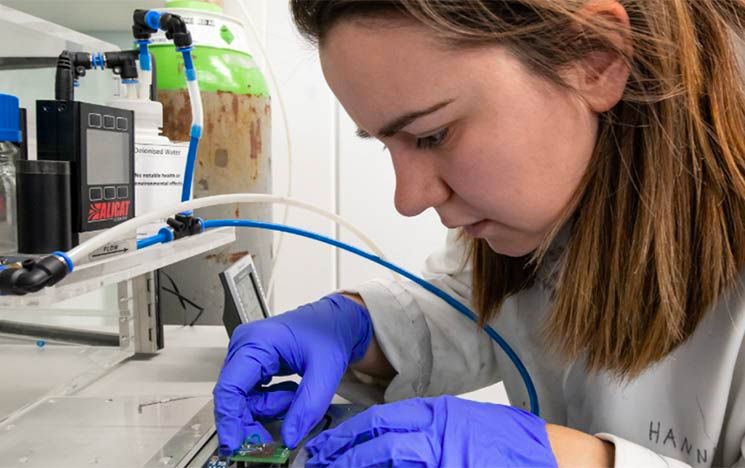
Life as a CASE PhD student combines independent research with structured supervision and industry engagement. Students spend their time conducting experiments, analysing data, writing academic papers, and developing technical models.
At the same time, they maintain regular communication with both academic and industrial supervisors. This ensures the research stays aligned with academic standards and industrial expectations.
Many CASE projects involve advanced technical tools such as simulation software, machine learning frameworks, laboratory systems, or engineering design platforms. The experience is intellectually demanding but highly rewarding, especially for students interested in applied science and innovation.
Career Pathways After Completion
Graduates of EPSRC CASE Studentships often enter strong career positions due to their combined academic and industrial exposure. Many move directly into research and development roles within their sponsoring companies or similar industries.
Others continue into academia as postdoctoral researchers or lecturers. Some pursue careers in fast-growing fields such as artificial intelligence, data science, engineering consultancy, or technology management.
Because CASE students gain real industry experience during their PhD, they are often considered job-ready researchers. This gives them an advantage in both academic and corporate environments.
Misunderstandings About CASE Studentships
It is important to clarify that EPSRC CASE Studentships are not personal profiles. They do not refer to individuals and therefore have no attributes such as age, height, family background, lifestyle, physical appearance, net worth, or social media accounts.
These details belong only to people, while CASE studentships are academic funding structures designed to support research. Any attempt to treat them as personal biographies is based on misunderstanding.
Importance in Modern Research
The importance of CASE studentships lies in their ability to connect academic research with industrial innovation. Many modern industries require solutions that are both scientifically strong and practically usable, and CASE programs help bridge that gap.
Fields such as artificial intelligence, renewable energy, climate science, healthcare technology, and advanced manufacturing benefit greatly from this model. The collaboration ensures that research outcomes can influence real-world products, systems, and policies.
Conclusion
The EPSRC CASE Studentship is a modern and highly effective PhD funding model that integrates academic research with industrial collaboration. It provides students with financial support, professional exposure, and access to real-world research challenges.
Rather than being a personal identity or profile, it represents a structured academic pathway designed to produce skilled researchers who can contribute both to science and to industry. For students interested in engineering, science, and technology, it offers a powerful opportunity to build a research career that is both academically strong and practically meaningful.
FAQs
Q: What is EPSRC CASE Studentship?
A: EPSRC CASE Studentship is a UK PhD funding program that combines university research with industry collaboration.
Q: Is EPSRC CASE Studentship a person or profile?
A: No, EPSRC CASE Studentship is not a person or profile. It is a research funding scheme for PhD students.
Q: Who funds EPSRC CASE Studentships?
A: EPSRC CASE Studentships are funded by EPSRC (UKRI) along with support from industry partners.
Q: What does CASE mean in EPSRC CASE Studentship?
A: CASE in EPSRC CASE Studentship stands for Collaborative Award in Science and Engineering.
Q: What is the main benefit of EPSRC CASE Studentship?
A: The main benefit of EPSRC CASE Studentship is full PhD funding with real industry experience during research.